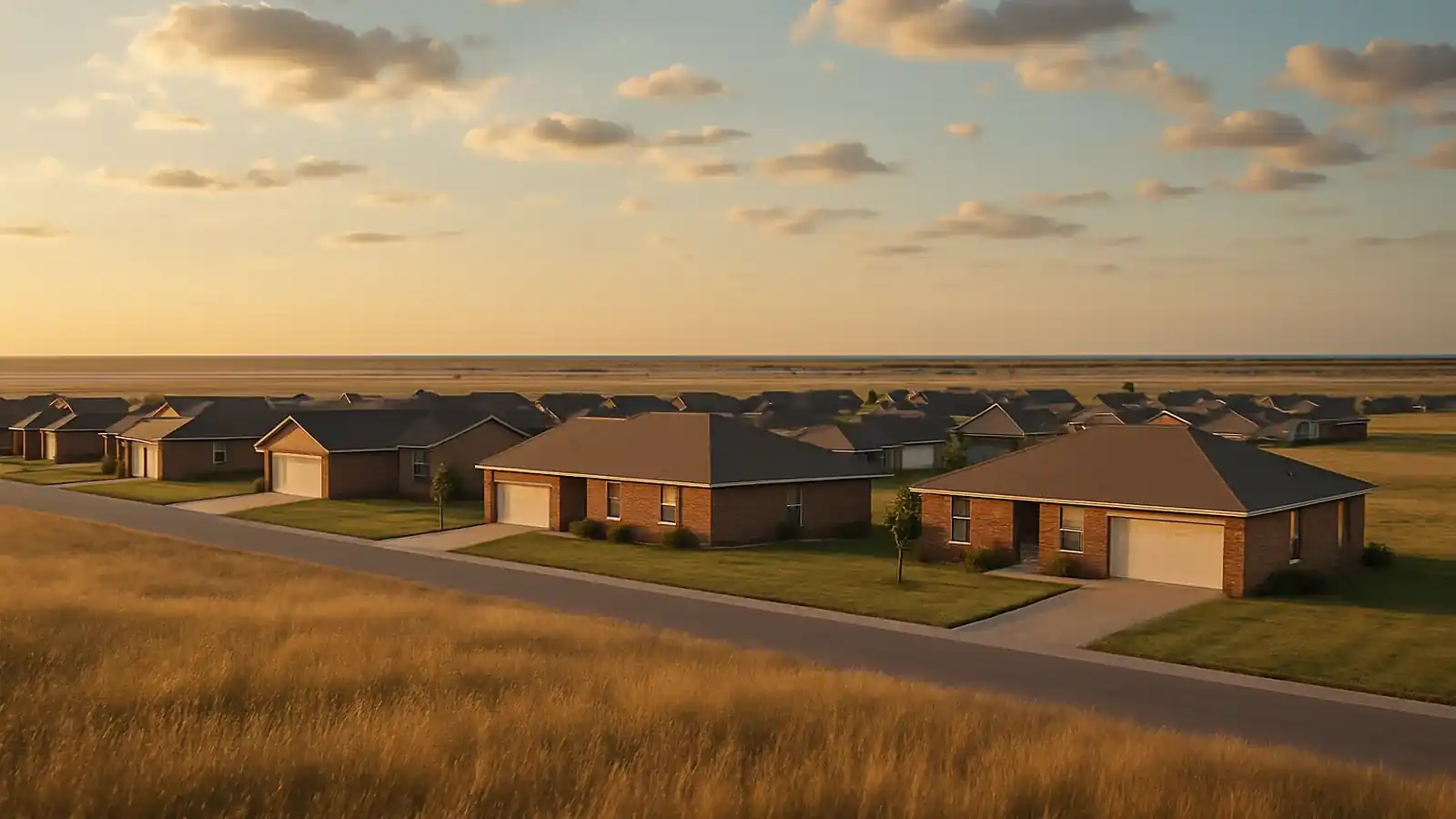
For most structural jobs, Goddard homeowners should expect $3,000–$12,000, with individual piers at $1,200–$3,000 and crack injection from about $400. Each Goddard request goes from Wichita Foundation Co. to one independent local specialist. Before agreeing to anything, ask for a laser-level survey, wall deflection readings and a look at how rain leaves the lot.
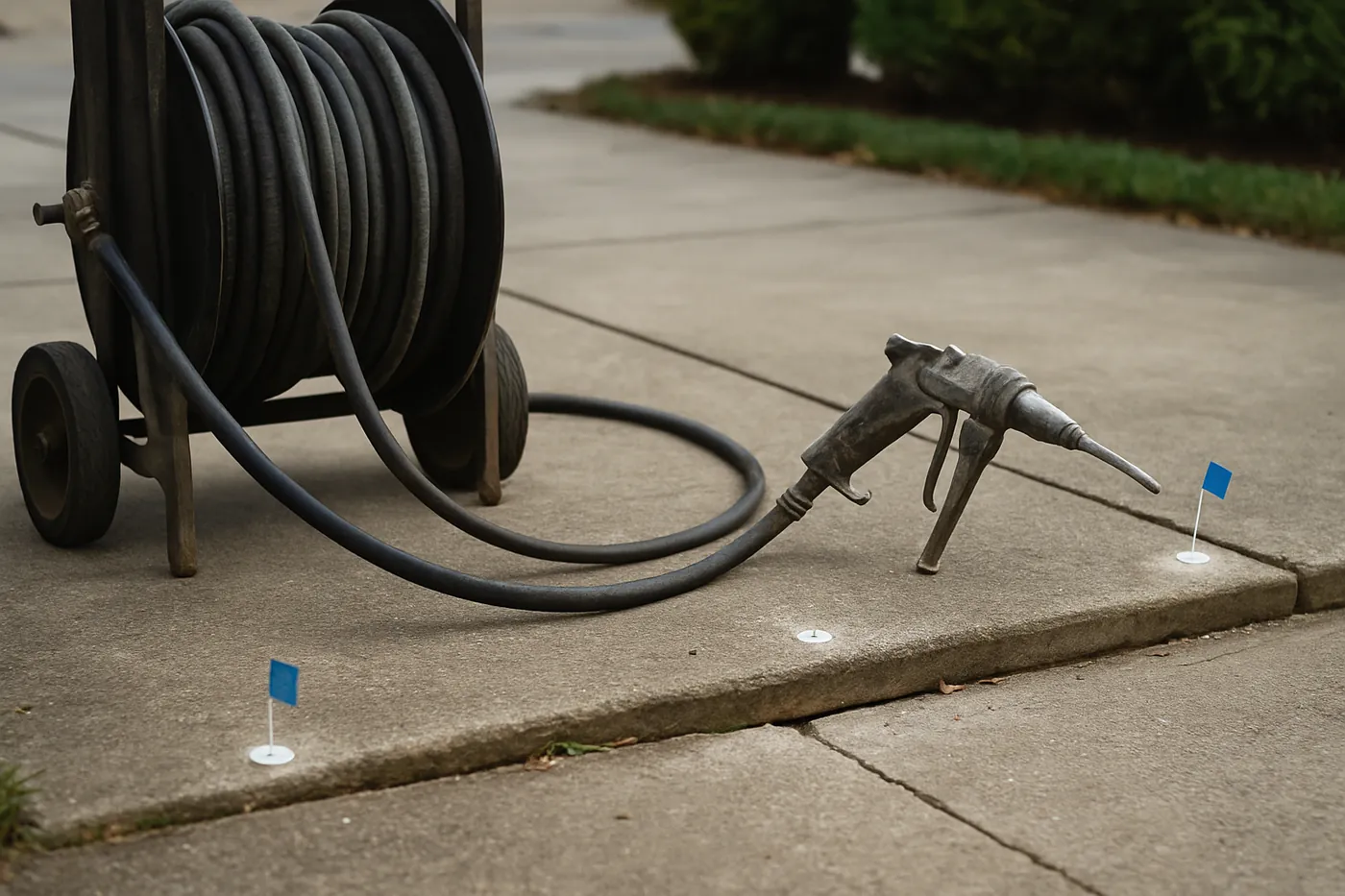
The newest clocks in the ring
Goddard's growth spurt is the ring's youngest: subdivisions barely into their first decade, graded pads still settling into their new moisture equilibrium, builder warranties expiring on schedule. The docket runs early-chapter: young-concrete shrinkage lines, first fill-settlement reports at years eight-plus, and moisture stories still being written by brand-new grading and landscaping choices.
Early-chapter advantages
Young houses reward early habits: baselines while everything is healthy, shrinkage sealing before water recruits the lines, moisture plans installed before amplitude does damage, and (when the fill clock does chime) two-pier answers instead of six. Goddard is where a monitoring-first approach earns its keep most visibly; an early measured evaluation is the cheap way to know.
Asked in Goddard
Our builder's warranty just expired and hairlines appeared. Coincidence?
Calendar, not conspiracy: year-one-through-three hairlines are curing shrinkage doing normal things, and warranty windows simply end around when owners start looking closely. Seal them flexibly, baseline the house, and save the worry for patterns the baseline would catch.
When should a new Goddard house get its first evaluation?
Ideally before anything shows. A healthy-house baseline turns every future question into arithmetic. Practically: at first hairline, first sticky door, or year five, whichever arrives first. Ask whether the visit is free; the timing question has no wrong answer except 'never.'
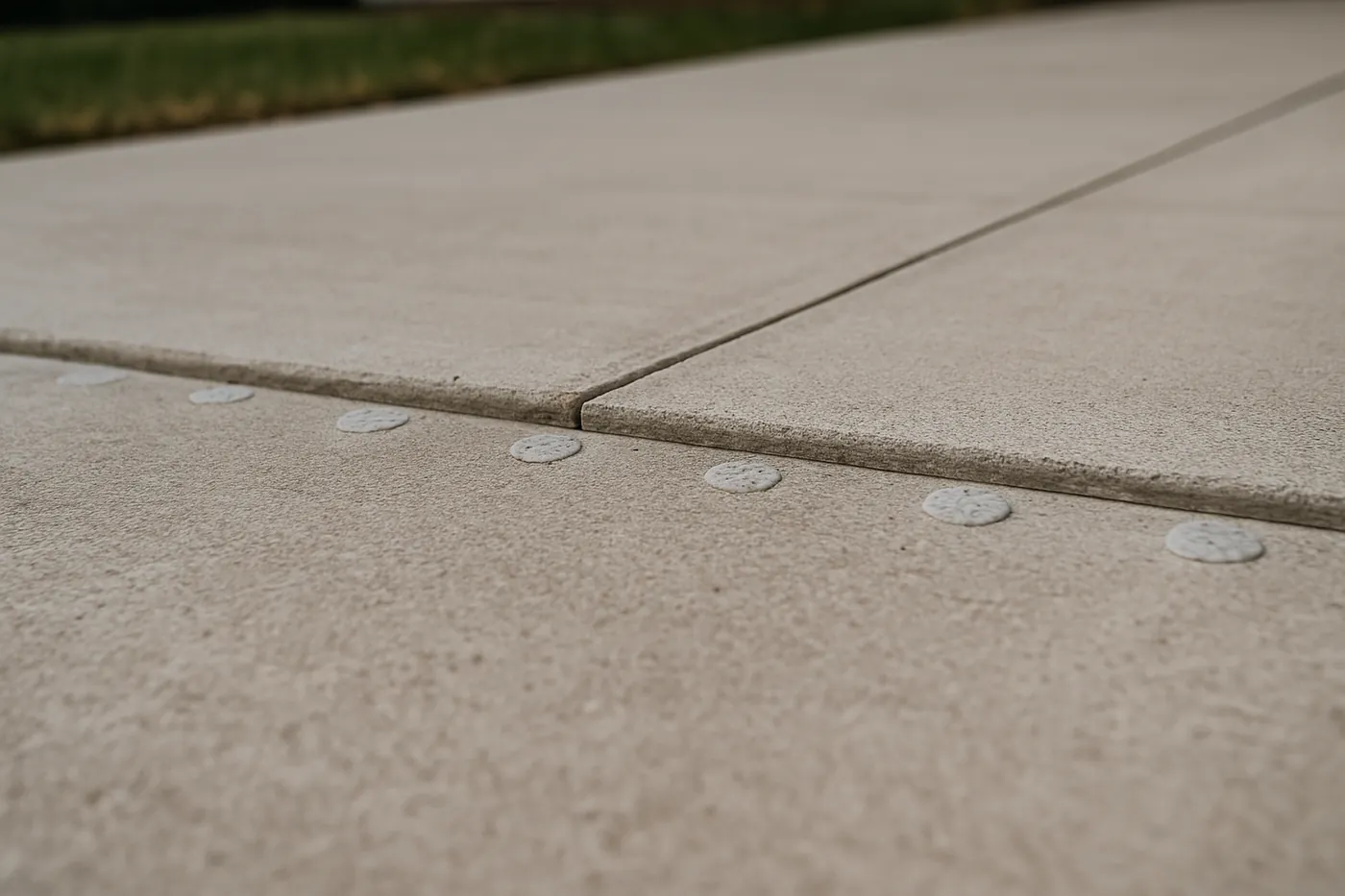
Mostly built after 2000
Goddard's roughly 2,000 homes have a median build year of 2005 in Census estimates for 2020-2024. About 40% went up in the 2000s alone and another 28% since 2010. A small older core remains, including about 90 homes from before 1940. So in Goddard a foundation question is most often about a house built in the last 25 years, still settling into a graded lot, with a few century-old homes that call for a gentler approach.
Dry Creek drainage
The streams FEMA has studied inside Goddard are the branches of Dry Creek south of Cowskin Creek, among them the Dry Creek Goddard Tributary. The flood map marks Zone A and Zone AE along them. A subdivision built near one of those draws can collect runoff its grading plan did not expect, so a moisture check belongs in any Goddard evaluation.
Permits through City Hall
Goddard's permits page says the city processes every permit for work inside city limits, and that once a permit is paid, inspections are arranged with the City of Goddard. Contractors must hold a license from the Metropolitan Area Building and Construction Department; the city has no separate business license. Ask the specialist to confirm that license before work begins.
The ring, and home base
Nearby towns are listed on the service areas page, and the Wichita foundation repair overview explains the metro's clay. Some companies charge for the first visit and many don't; find out when they call, and ask for the measured report to keep.
Get a Wichita foundation evaluation
Tell us what the house is doing (a crack that grew, a door that quit closing, a slab that dropped) and we'll pass your request on for an evaluation. A local specialist who works in Wichita will call you back.