
Foundation repair in Wichita costs $3,000–$12,000 for most structural work — piers $1,200–$3,000 each, crack injection from $400. The metro's fat clay contains bentonite and can swing roughly 30% in volume between saturated springs and baked summers, making moisture-cycle damage the city's defining foundation problem.
The Wichita calendar of symptoms, what fat clay actually does, and the repairs that end the ride.
The symptoms run on a calendar here
- August cracks — drought shrinks the clay off your footings; diagonals open over doors and windows
- The visible summer gap — soil pulling back from the slab edge; the accordion, mid-exhale
- September doors — frames racking as one corner rides lower than the rest
- Spring heave — wet-season swell lifting slab interiors and pressing basement walls
- Stair-steps in brick veneer — masonry mapping the footing's travels
- Sunken patios and drives — the same cycle at flatwork scale
One dated symptom gets monitored. Patterns — especially the drought-cycle set — get measured while repairs are still the modest version.
Fat clay, explained without the lab coat
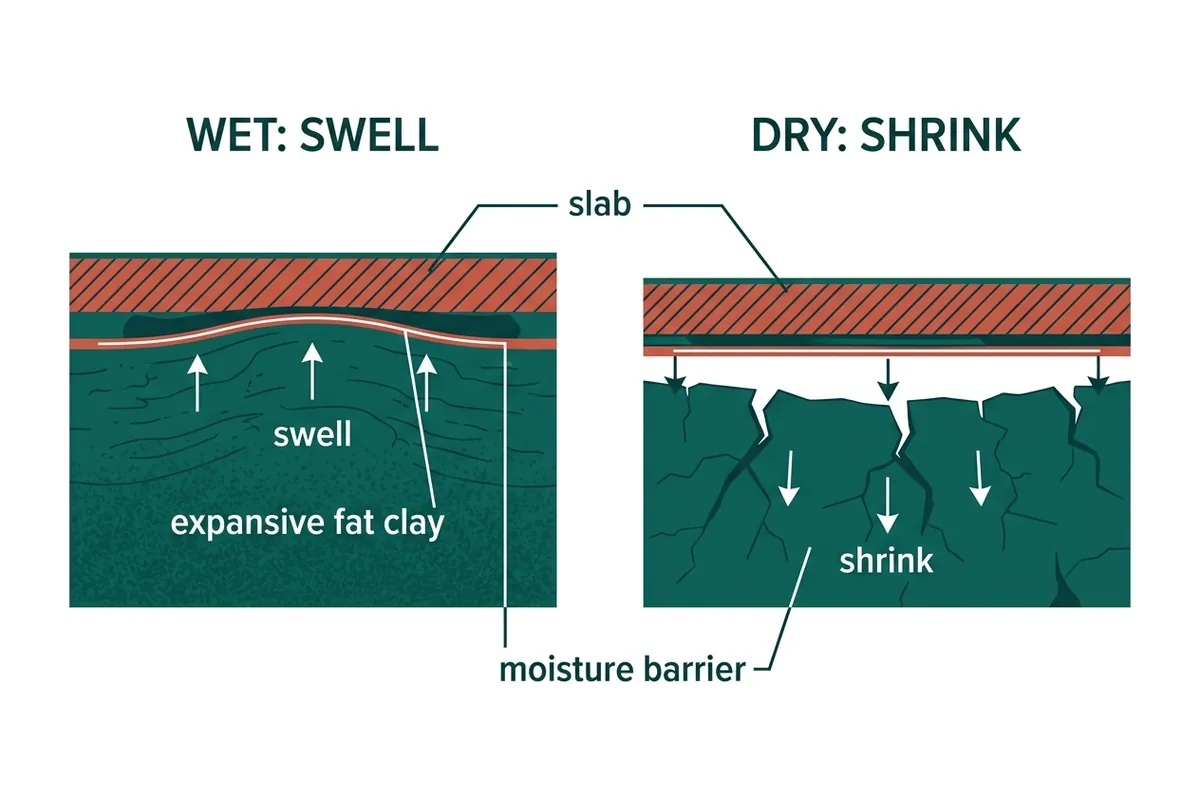
Engineers call it fat clay: high-plasticity soil that takes on water like a sponge and gives it back grudgingly. Wichita's carries bentonite — literally the mineral drilling crews buy because it swells — and the volume swing between saturated and baked can reach roughly 30%. Now put a prairie climate on top: cloudburst springs, wind-scoured baking summers, drought years that crack the yard open. Your foundation sits on material that spends every year inhaling and exhaling under it, and the damage — settlement, heave, wall pressure, slab tilt — is just the house keeping score.
The good news is that this failure mode is thoroughly understood and thoroughly fixable: carry the load below the active clay, restrain what the swell pushes, and flatten the moisture swing so the accordion plays quieter.
The repairs, matched to the cycle
| What's failing | The fix | Typical range |
|---|---|---|
| Drought-settled footings | Piers below the active clay | $4,000–$12,000 |
| Walls pushed by wet-season swell | Measured restraint systems | $2,500–$10,000 |
| Cycle-worked cracks | Injection + stitching | $400–$1,500 |
| Water feeding the swing | Drainage + moisture management | $2,500–$8,000 |
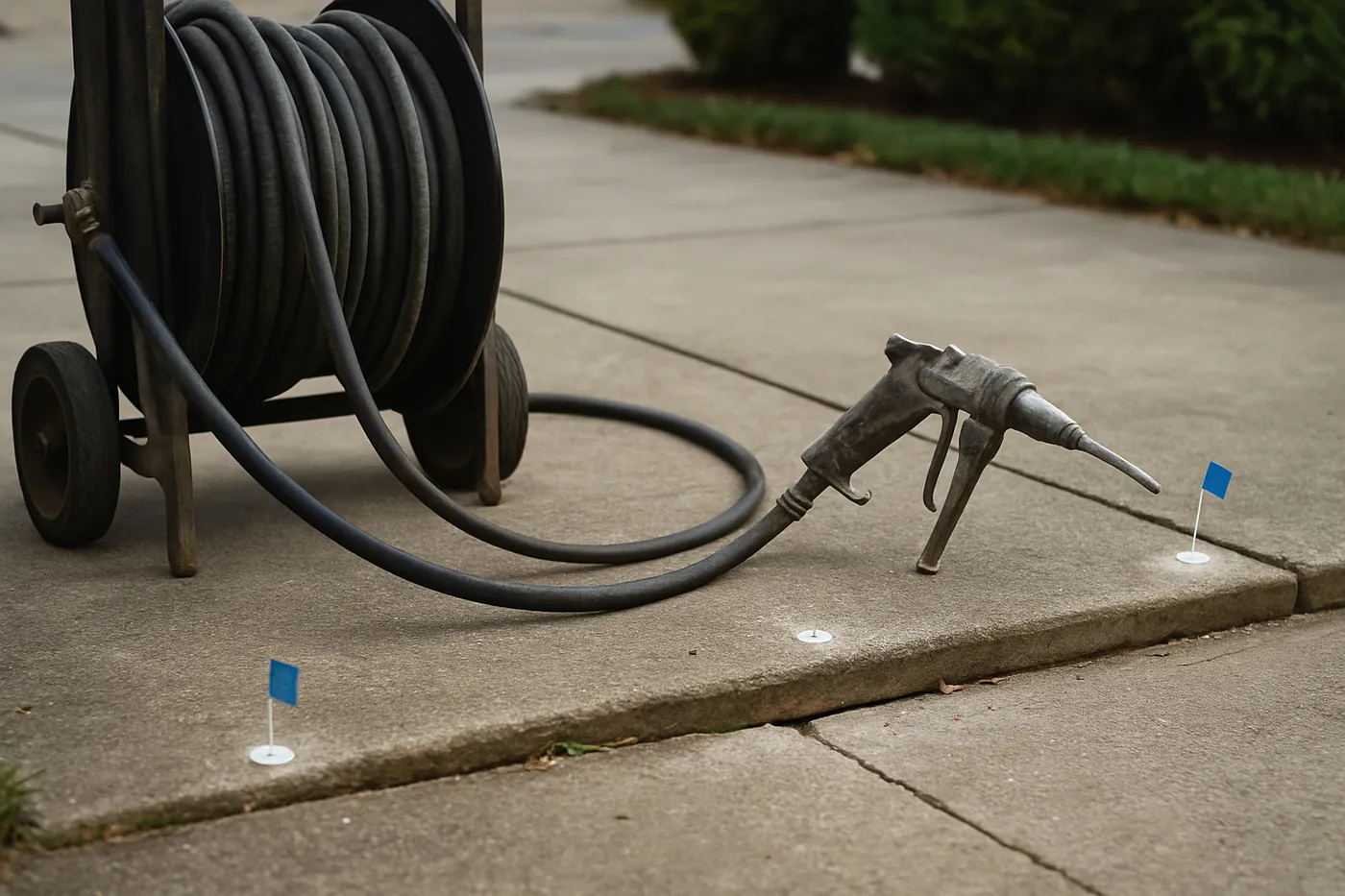
| Heaved or sunken slabs | Foam leveling | $500–$2,500 |
Every scope opens with the free measured evaluation — laser floor levels, crack log, wall gauging, and a moisture-story walk — and closes with fixed written prices. The decisions behind the table run deeper on their own pages: how we diagnose drought-cycle settlement, what slab-on-grade homes face on this clay, when helical piers beat push piers, whether exterior or interior waterproofing fits an occupied basement, what insurance actually covers, and when an independent structural engineer is worth the fee.
Moisture management is a Wichita specialty
In most metros, “water the dirt” is a joke. On fat clay it's engineering: flattening the wet-dry amplitude around a foundation — even watering in drought, ruthless drainage in storm season, gutters that actually leave — measurably calms the cycle that causes the damage. Our scopes here routinely pair steel with a moisture plan, because the cheapest pier is the one the clay never demands.
Foundation questions Wichita homeowners ask
How much does foundation repair cost in Wichita?
Most structural jobs run $3,000-$12,000: piers $1,200-$3,000 each (typically three to eight), wall restraint $2,500-$10,000, crack injection from $400, drainage $2,500-$8,000. Slab-on-grade repairs — a big share of Wichita's housing — often land below basement-market prices. Every number follows a free measured evaluation. Our Foundation repair cost breakdown for Wichita shows what drives each figure, line by line.
What's actually in Wichita's soil?
Fat clay — the engineer's term for high-plasticity expansive clay — laced with bentonite, the same mineral drillers use precisely because it swells. Saturated, this soil can expand up to roughly 30% in volume; baked by a prairie summer, it shrinks just as hard. Your foundation rides that accordion every year.
Why do Wichita foundations crack in August?
Drought is this market's signature loading. Prairie summers bake the fat clay until it pulls away from footings and slab edges — you can see the gap open along foundations in a dry July — and support goes missing exactly where the soil shrank. August cracks, September sticking doors: the Wichita calendar.
Is slab-on-grade better or worse here than a basement?
Different, not better: slabs ride the clay's moisture cycle across their whole footprint, so edge-drying in drought lifts corners and interior wet spots heave floors. Basements trade that for wall pressure in wet years. Wichita has plenty of both, and we repair both — the evaluation reads which physics your house is doing.
Does watering my foundation actually help?
In this soil, moisture consistency genuinely matters — the goal is flattening the wet-dry swing, not making mud. Soaker lines run evenly (not against the slab), shade management, and honest gutters do more good here than in almost any market. We'll spec the moisture plan alongside any repair.
What about the 24-inch frost line?
Sedgwick County's Unified Building & Trade Code sets 24 inches — shallow by Midwest standards, so frost heave plays a supporting role rather than the lead. The lead is the clay's own volume cycle; repairs engineer for that first.
Are repairs warrantied?
Structural systems carry written transferable warranties, stated in the scope before you sign. In an expansive-clay market, documented repair paperwork is a resale advantage buyers' inspectors actively look for.
How fast can you evaluate my house?
Within days across the Sedgwick County ring, faster for active movement. Calls and forms get same-business-day replies.
Foundation repair across the metro
Andover · Bel Aire · Derby · Goddard · Haysville · Maize · Mulvane · Park City · Valley Center · all service areas
Get a free Wichita foundation evaluation
Tell us what the house is doing — a crack that grew, a door that quit closing, a slab that dropped — and we'll schedule an evaluation with photos and crack measurements. We reply the same business day.