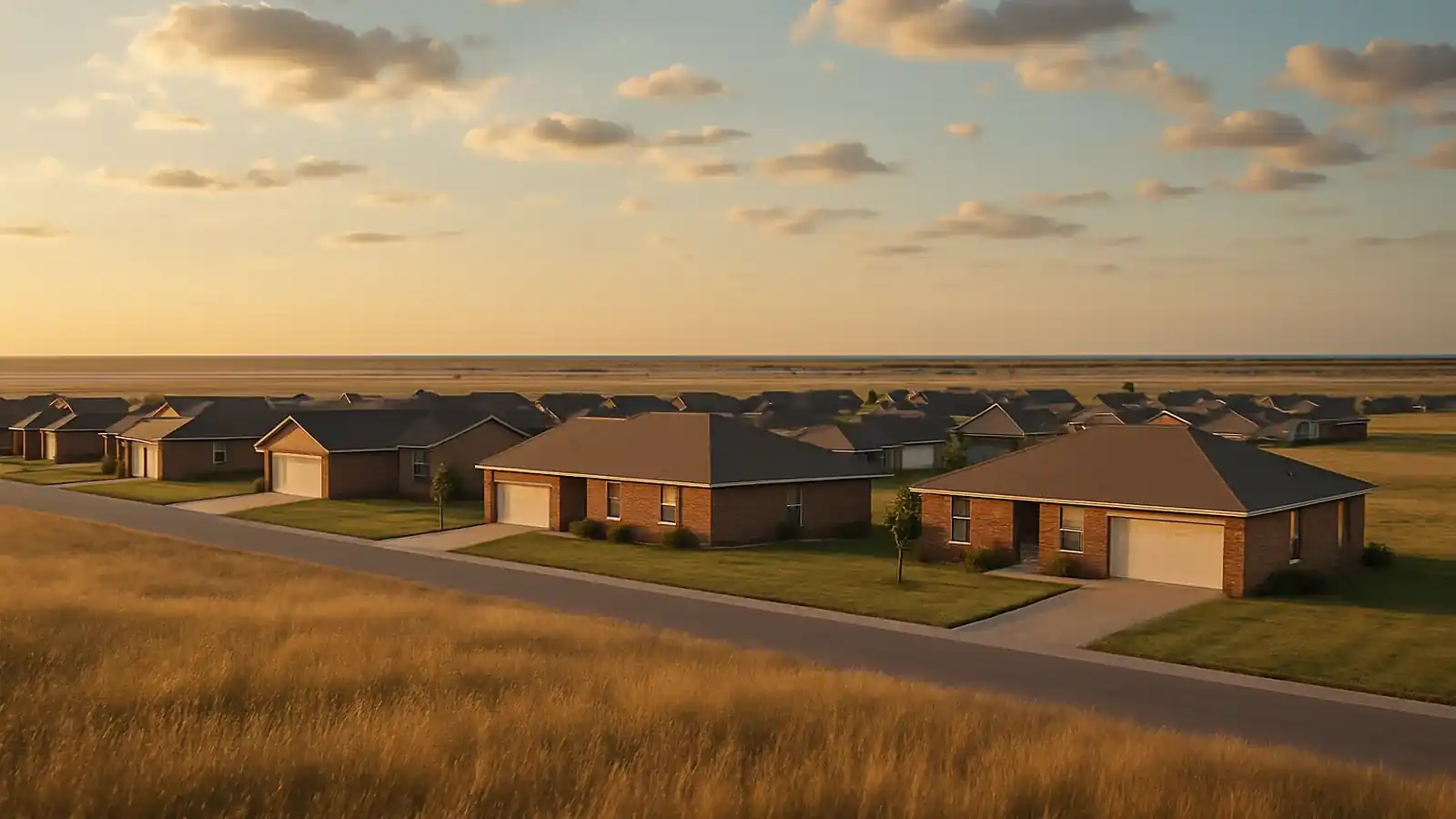
A structural foundation repair in Valley Center typically costs $3,000 to $12,000. That range covers piers driven past the active clay, wall restraint, moisture work and crack repair. Ask for measurements before any quote, and ask for the quote in writing.
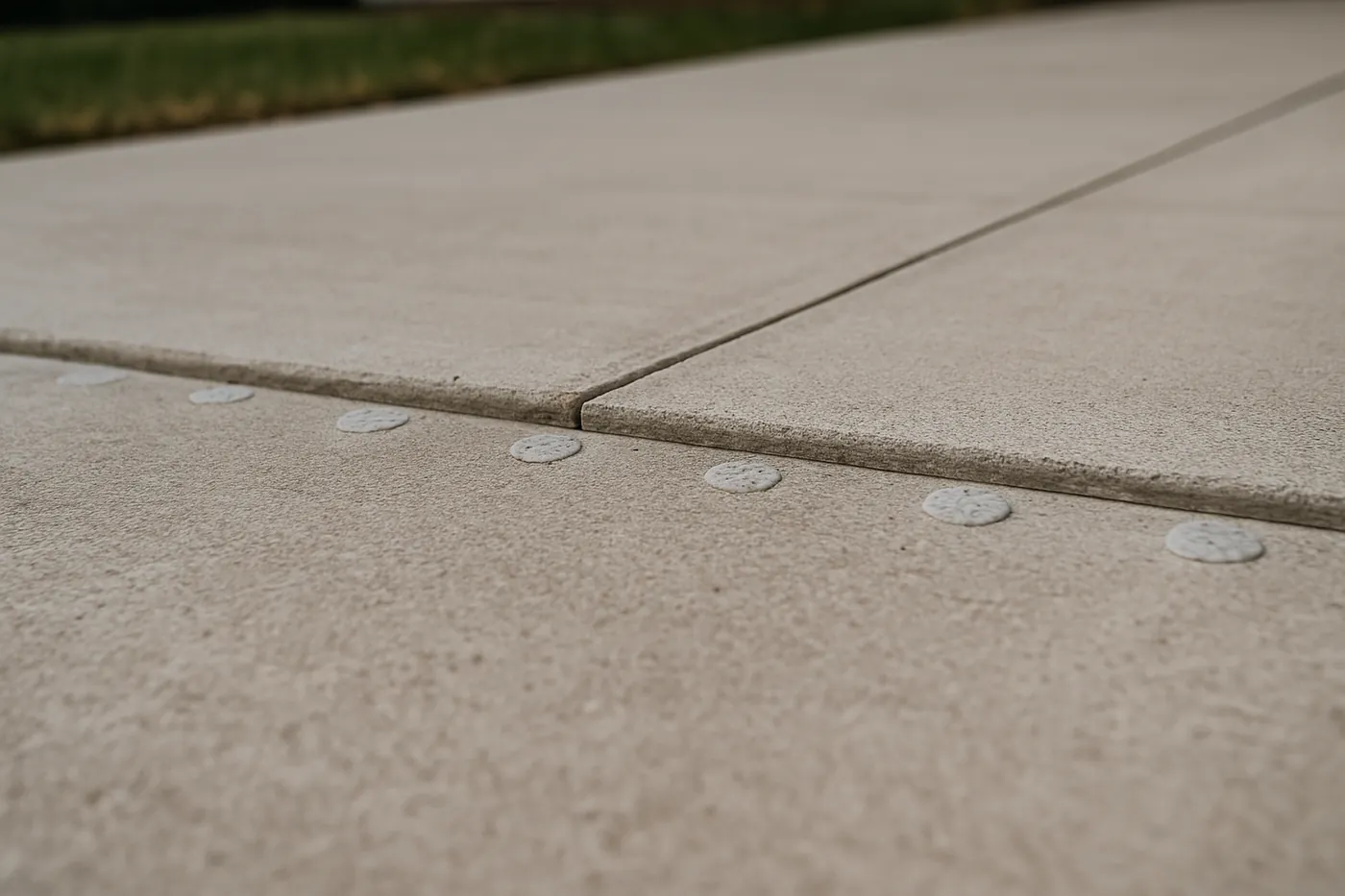
Edge-of-town amplitude
Valley Center's newer subdivisions push into open farmland, and open is the operative word: no urban shade, full wind exposure, and fat clay running its complete seasonal repertoire under young foundations. Add the standard fill clocks on graded pads and enthusiastic new-lawn irrigation, and you get the edge-of-town special: young houses running old-clay experiments at full amplitude.
Calming the experiment
The Valley Center playbook opens with amplitude control (moisture evenness and drainage that leaves) because young foundations protected from the swing mostly stay off the structural menu entirely. Where the fill clock or the bite already wrote chapters, helicals close them and flexible injection tidies the margins. measured evaluations, and more monitoring-verdicts here than anywhere: young houses caught early usually deserve them.
Asked in Valley Center
Our new lawn's irrigation runs daily. Foundation problem?
Establishing a lawn justifies a season of heavy watering: permanently daily is where fat clay starts writing differential-moisture cracks. Post-establishment, taper to even, modest cycles with foundation-adjacent zones lightest. Ask for the schedule to be specced during the evaluation.
Do farm-edge lots have different soil than city lots?
Same clay family, less disturbed history, and sometimes old agricultural drainage (terraces, waterways) redirecting storm flow in ways the subdivision grading never mapped. When a young house's moisture story doesn't match its lot plan, buried farm history belongs on the checklist.
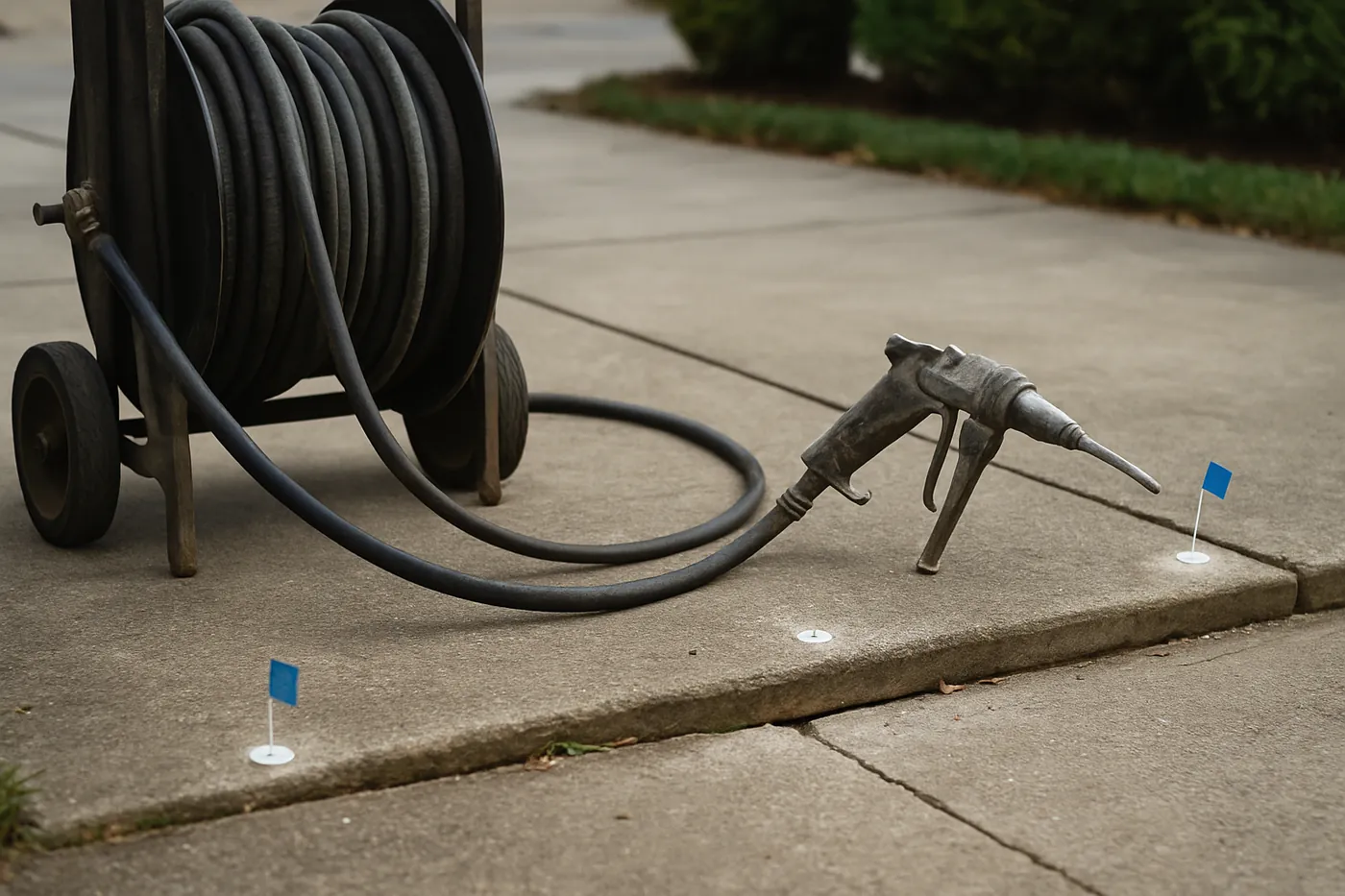
A 1970s town with farm-edge growth
The 1970s were Valley Center's busiest building decade: about 790 of its roughly 3,230 homes, or 24%, per the Census Bureau's 2020-2024 survey. About 7% (around 210 homes) were built before 1940, and the median year built is 1981. Newer subdivisions exist, with about 24% of homes built since 2000, but nearly half the town predates 1980. A crack in Valley Center is as likely to sit in a fifty-year-old basement as in a new slab.
Little Arkansas River country
The Little Arkansas River runs past Valley Center, and the USGS keeps a gauge on it there. FEMA's flood map also studies West Branch Chisholm Creek and Trailsview Slough within the city. Homes near any of those should have the flood zone checked first, because a high water table near a stream can add pressure on basement walls in a wet spring.
City license and permit
Valley Center issues building permits inside its city limits and requires one for new construction and for alterations to existing structures. Every contractor must hold a City of Valley Center license, and Sedgwick County notes the city also expects an MABCD license. Community Development is at 545 W. Clay Ave.
Next step for a Valley Center house
Pencil the date on each crack and note recent weather; that turns the next look into a comparison. Then schedule the evaluation and ask to keep a written copy of the readings. The cost guide sets out the numbers ahead of the visit.
Get a Wichita foundation evaluation
Tell us what the house is doing (a crack that grew, a door that quit closing, a slab that dropped) and we'll pass your request on for an evaluation. A local specialist who works in Wichita will call you back.